RISK FACTOR
Boosting Risk
Data Clarity &
Engagement
Boosting Risk
Data Clarity &
Engagement
Boosting Risk
Data Clarity &
Engagement
Boosting Risk
Data Clarity &
Engagement
Risk Factor’s product detail experience made it difficult for users to interpret and act on complex climate risk data. I led a redesign of the data hierarchy, interaction patterns, and visual system to improve clarity, comprehension, and engagement, helping users make more confident decisions while creating a scalable foundation for future growth.
Product UX & Data Visualization
Category
Figma, User Testing
Tools
2 UX/UI Designers, 4 Engineers, 2 Product Managers
Team
UX/UI Design, Design System
My Role
UX/UI Design, Design System
My Role
5 Months
Duration
RISK FACTOR
Boosting Risk
Data Clarity &
Engagement
Risk Factor’s product detail experience made it difficult for users to interpret and act on complex climate risk data. I led a redesign of the data hierarchy, interaction patterns, and visual system to improve clarity, comprehension, and engagement, helping users make more confident decisions while creating a scalable foundation for future growth.
Product UX & Data Visualization
Category
Figma, User Testing
Tools
2 UX/UI Designers, 4 Engineers, 2 Product Managers
Team
UX/UI Design, Design System
My Role
5 Months
Duration
Executive Summary
RiskFactor’s product detail experience made it difficult for users to interpret and act on complex risk data. I led a redesign of the data hierarchy, interaction patterns, and visual system to improve comprehension, engagement, and subscription conversion across devices.
217%
Increase in trial sign-ups
$1K to $35K per month
Monthly subscription growth
Improved Engagement
Time-on-page across key product views
Identifying Issues &
Designing Solutions
Through user research, heuristic review, and analysis of product usage patterns, several recurring issues emerged that limited comprehension and engagement within the product detail experience.
Problem
RiskFactor’s property detail experience made it difficult for users to locate and interpret critical risk information. Key insights were spread across multiple pages, requiring users to navigate between property details and map views to build a complete understanding. This fragmentation increased cognitive load, reduced engagement, and made it harder for users to confidently assess climate risk for a given property.
Design Approach
The redesign focused on clarifying hierarchy, reducing cognitive load, and guiding users through complex risk data with greater confidence. The goal was to consolidate related information, surface key insights earlier, and create a more cohesive experience across property details and map views.
Rapid Alignment Through a Focused Design Sprint
Rapid Alignment
Through a Focused
Design Sprint
To quickly align on direction and reduce risk, we ran a focused, one-week design sprint. The goal was to validate core assumptions, identify viable layout and hierarchy patterns for risk summaries, and establish a clear direction before committing to full-scale design and development.
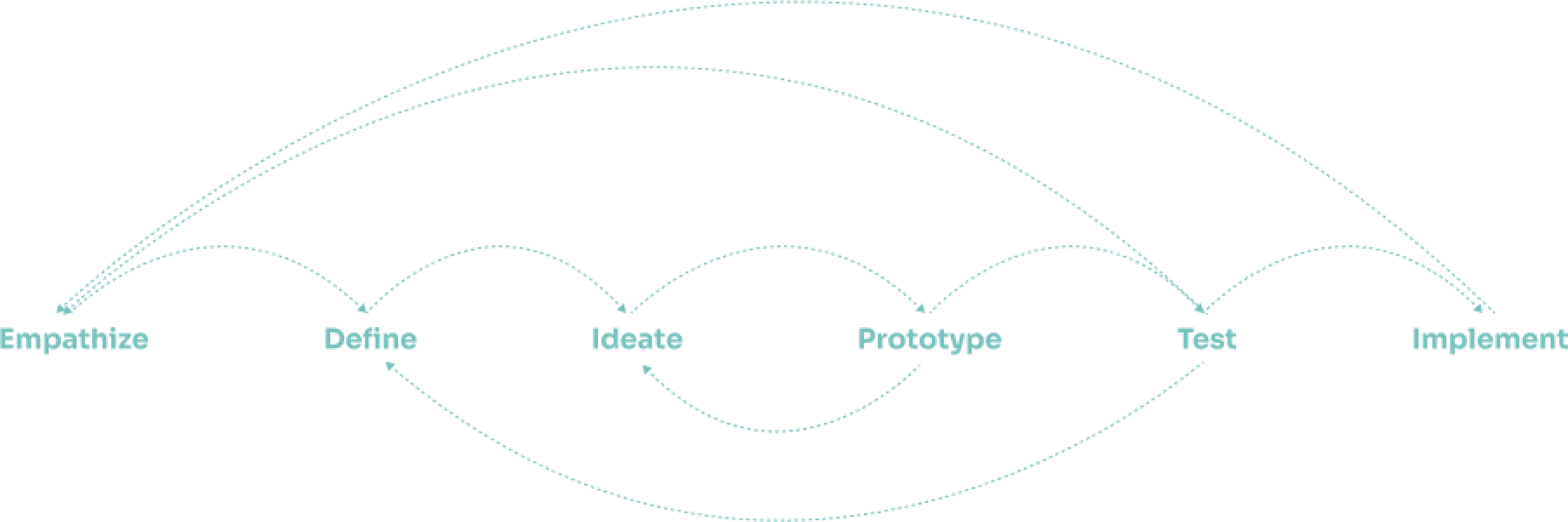
Outcome: The sprint aligned stakeholders on a single layout direction and a set of design principles that guided subsequent iterations.
Outcome: The sprint aligned stakeholders on a single layout direction and a set of design principles that guided subsequent iterations.
Sketches
Concept Development
Mid-Fidelity Sketches
Iterating
From Exploration to Direction
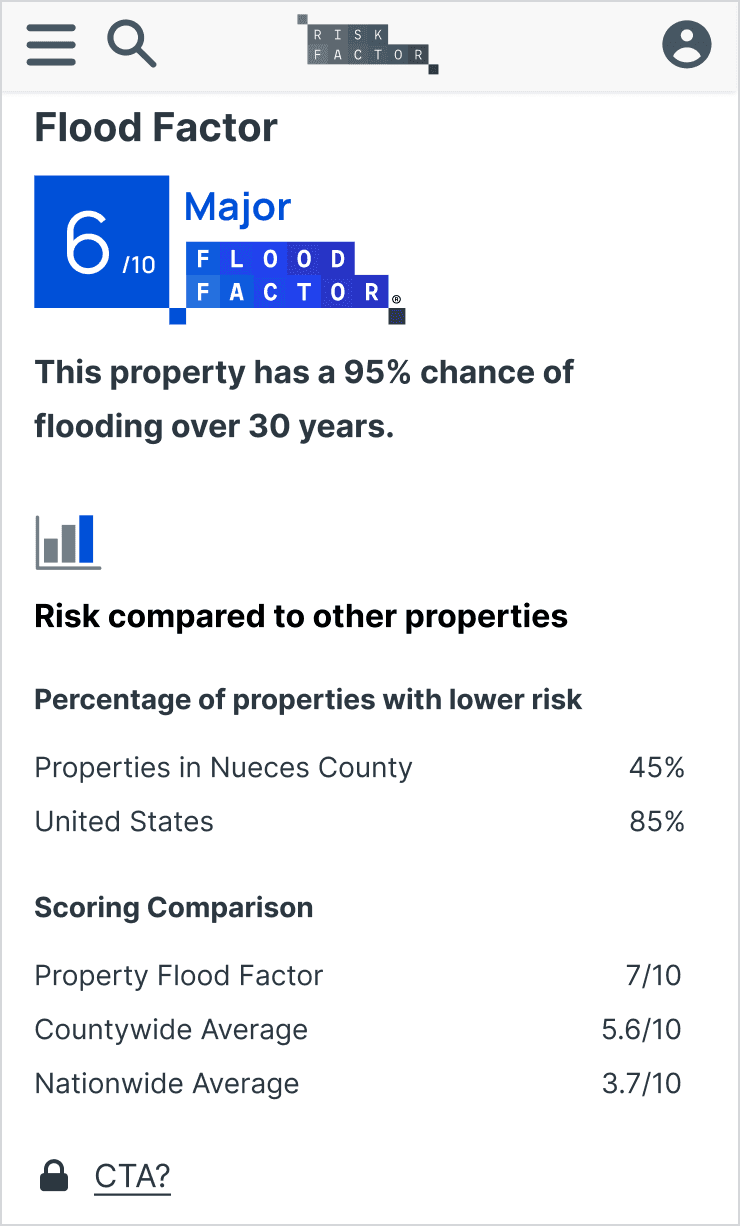
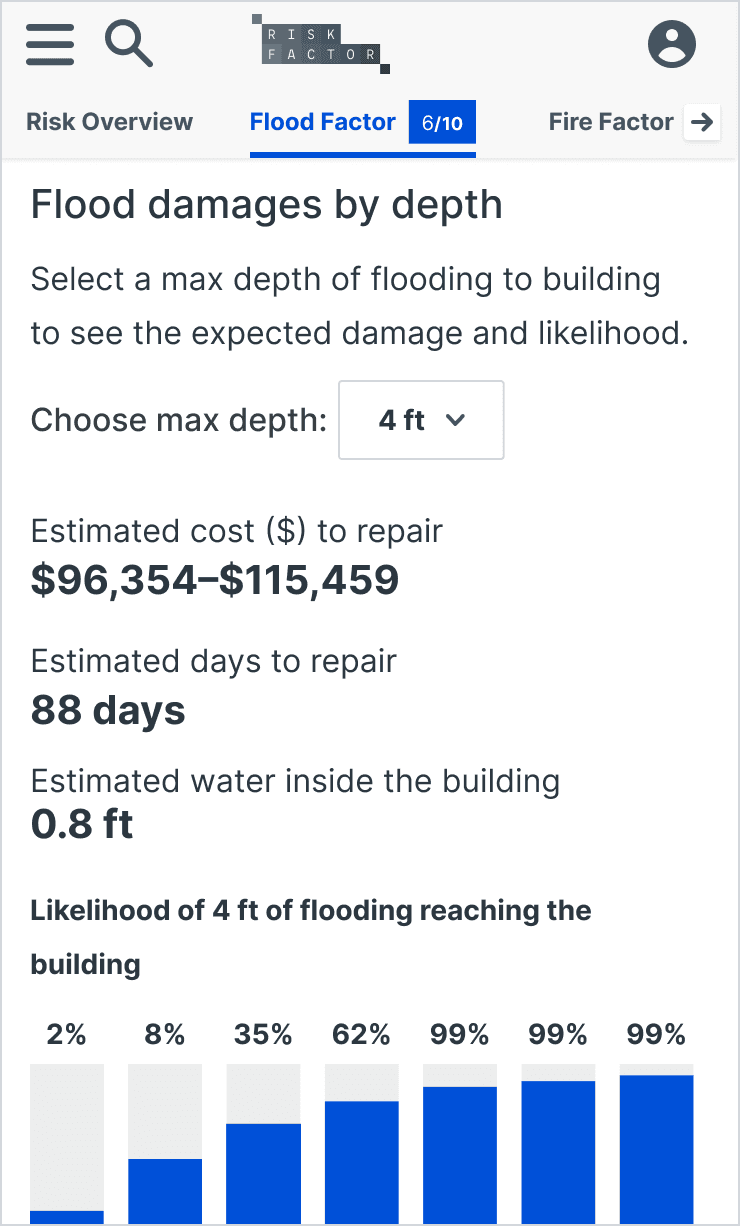
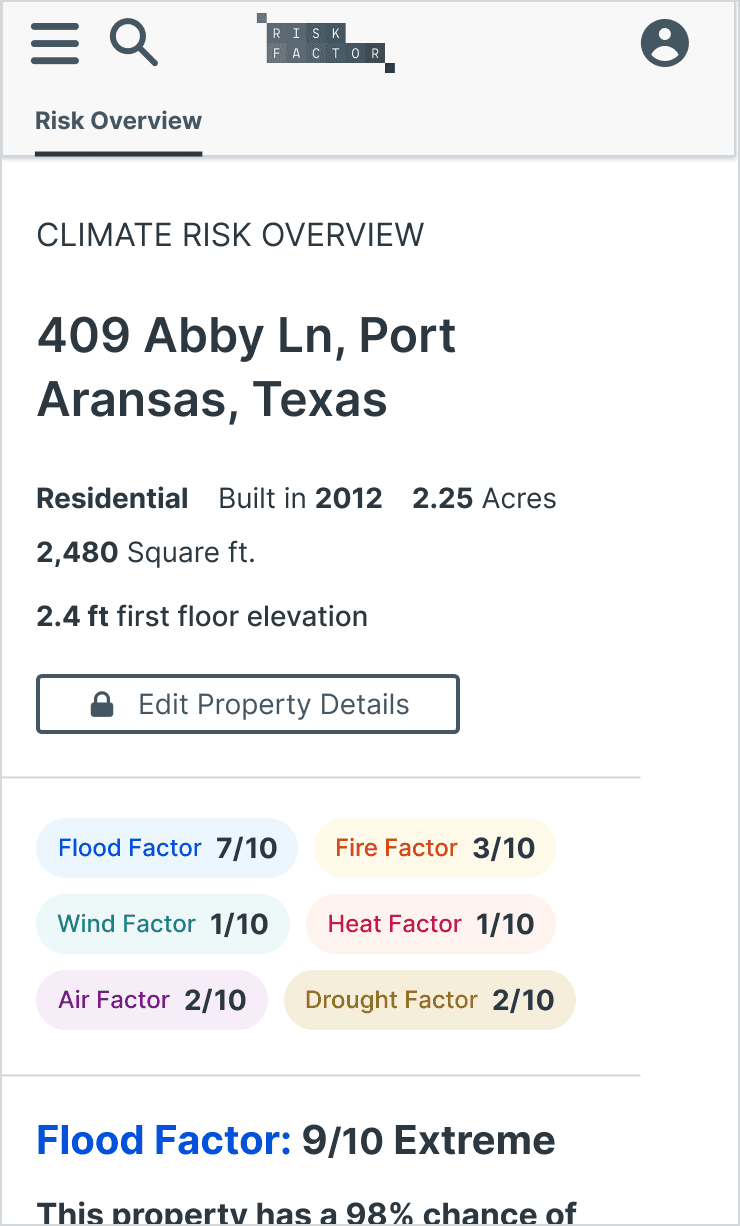
Early concepts explored multiple ways to structure and surface risk data. Through review and iteration, these explorations helped narrow toward a direction that prioritized clarity, reduced cognitive load, and guided users to key insights more quickly.
Representative mobile explorations testing hierarchy,
summary placement, and entry points into deeper risk insights.
Representative mobile explorations testing hierarchy, summary placement, and entry points into deeper risk insights.
Redefining & Designing
User-Centric
Adaptive Layout
Performance Optimization
Intuitive Navigation
Refining the Direction for
Clarity & Scale
Refining the Direction for Clarity & Scale
With a clear direction established, the design was refined to improve clarity, consistency, and scalability across the product detail experience. Iteration focused on tightening hierarchy, standardizing components, and ensuring the system could support additional risk factors and future expansion.
Designed for Scale and Maintainability.
Shared components and standardized patterns allowed the product to support additional risk factors without reworking the core experience.
Refining Layout & Hierarchy
Refining Layout & Hierarchy
Early iterations focused on clarifying hierarchy and improving scanability by surfacing key risk summaries earlier and reducing visual competition between data elements.
Early iterations focused on clarifying hierarchy and improving scanability by surfacing key risk summaries earlier and reducing visual competition between data elements.
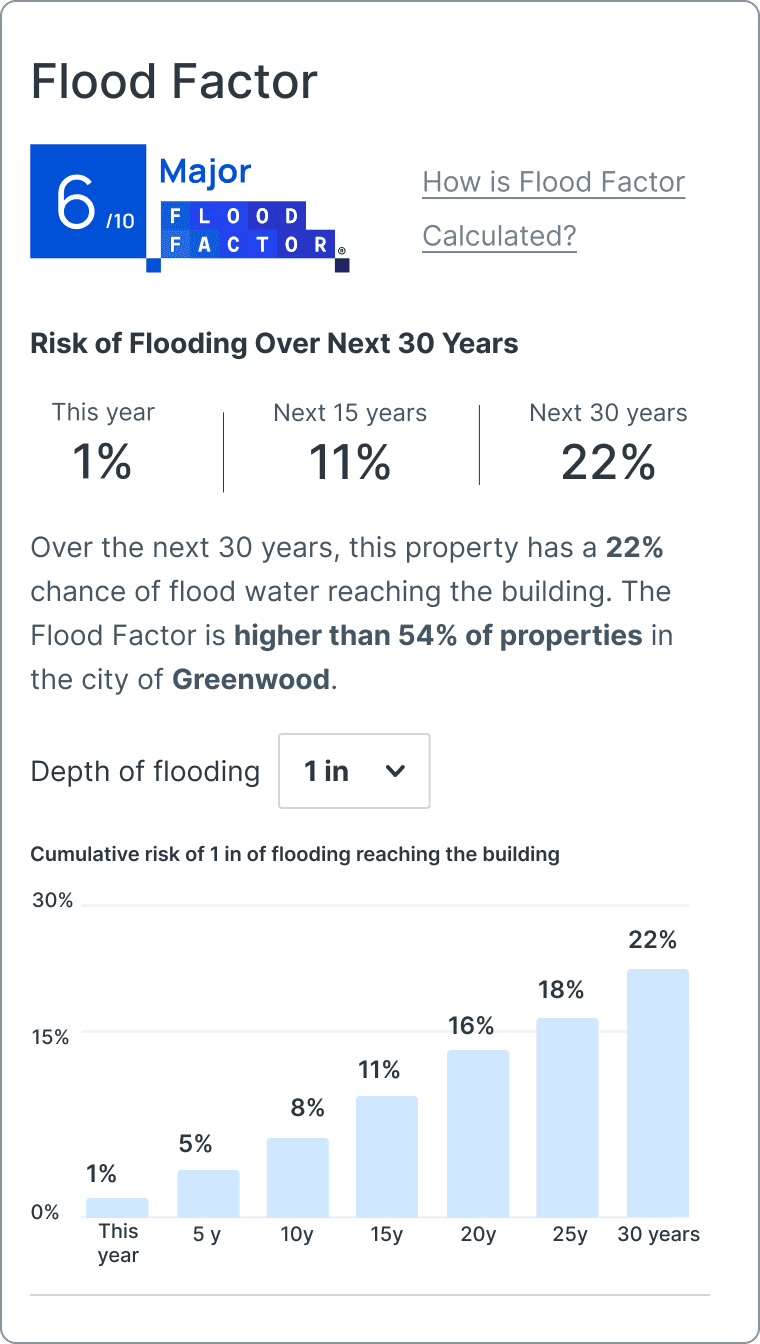
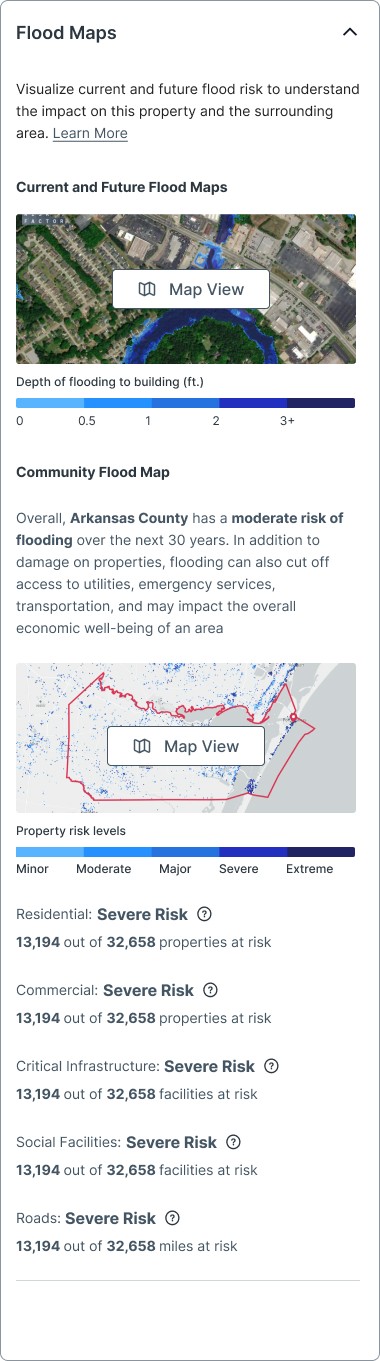
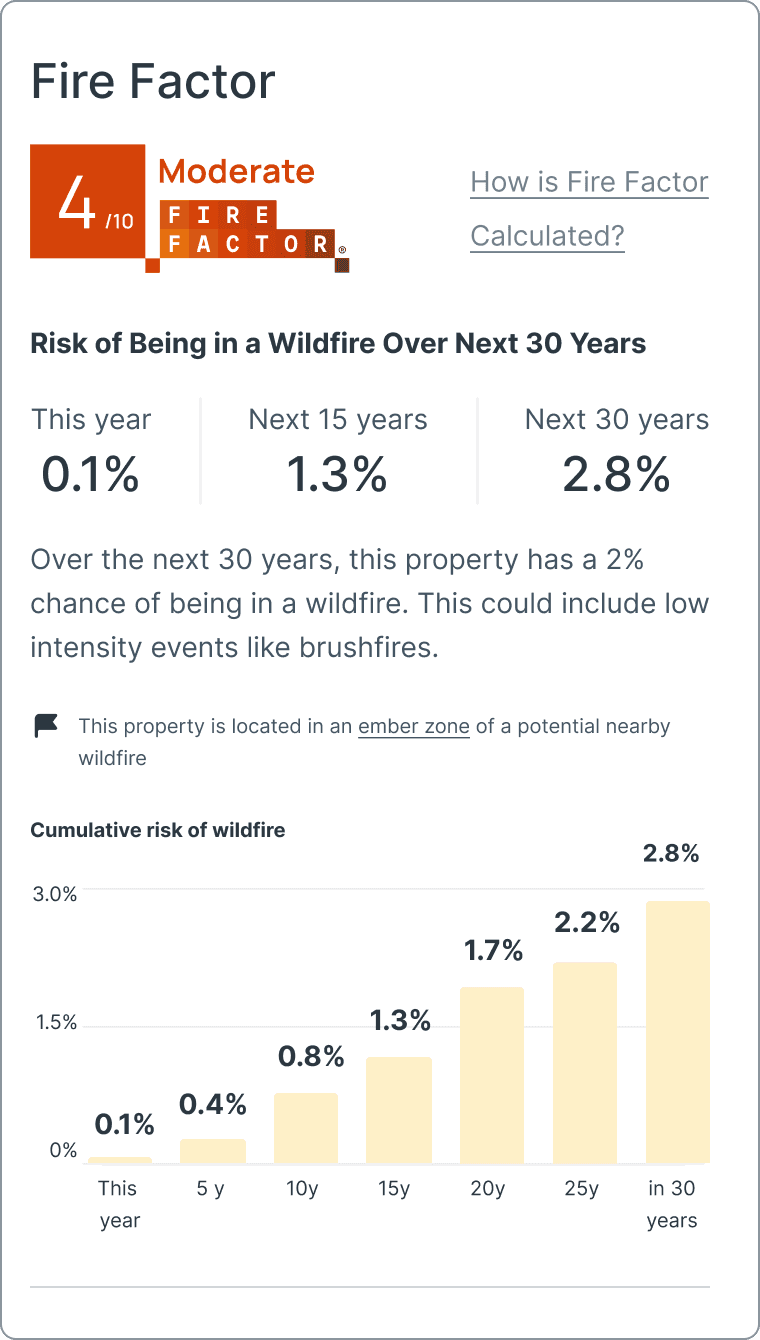
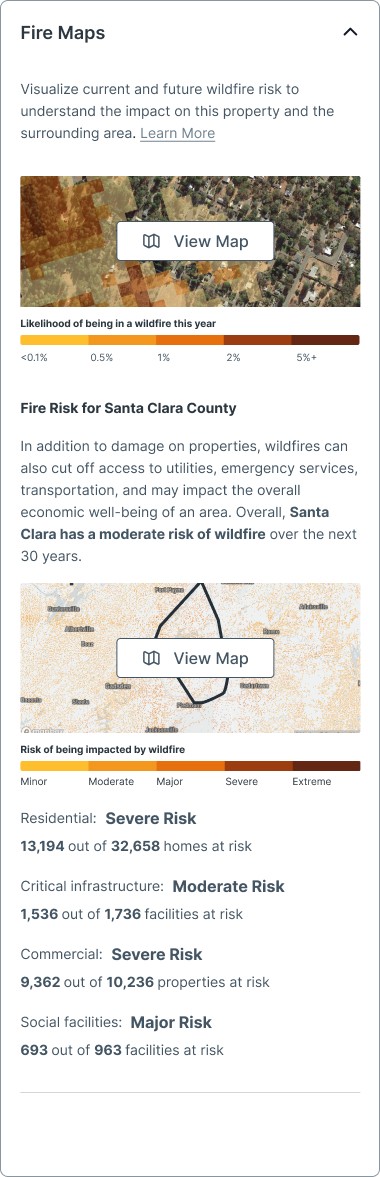
Design tradeoff: We reduced the amount of data shown by default and introduced progressive disclosure, prioritizing comprehension for first-time users while preserving access to detailed risk information.
Data Simplification
Data Visualization
Data Simplification
Adaptive Design
Simplifying Complex Risk Data
Risk data needed to remain accurate, transparent, and defensible while being understandable to non-expert users. The challenge was simplifying how information was grouped, labeled, and sequenced — without reducing credibility or precision.
Clarifying Hierarchy Through Grouping
Clarifying Hierarchy Through Grouping
Related risk data was grouped into consistent, scannable sections to help users understand context and relative severity more quickly.
Related risk data was grouped into consistent, scannable sections to help users understand context and relative severity more quickly.
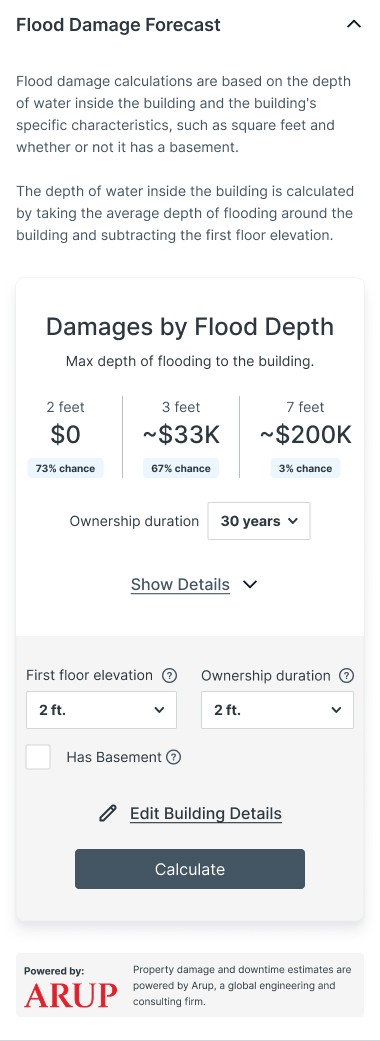
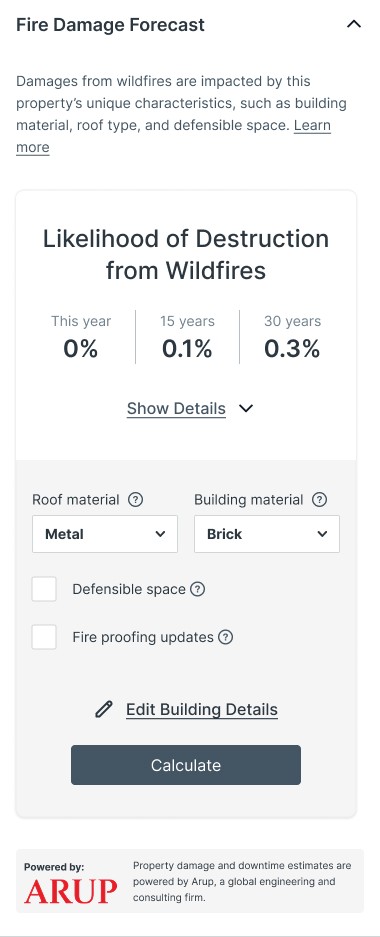
This shared structure allowed users to compare different risk factors using a familiar pattern, improving comprehension and reducing interpretation effort across the experience.
Progressive Disclosure of Risk Details
Rather than presenting all calculations and configuration options upfront, complexity was introduced incrementally, helping users maintain orientation while retaining full transparency into how risk estimates were generated.
Rather than presenting all calculations and configuration options upfront, complexity was introduced incrementally, helping users maintain orientation while retaining full transparency into how risk estimates were generated.
Design tradeoff: We limited the amount of data shown by default and relied on progressive disclosure, prioritizing clarity for first-time users while preserving access to detailed risk information for advanced use cases.
Design tradeoff: We limited the amount of data shown by default and relied on progressive disclosure, prioritizing clarity for first-time users while preserving access to detailed risk information for advanced use cases.
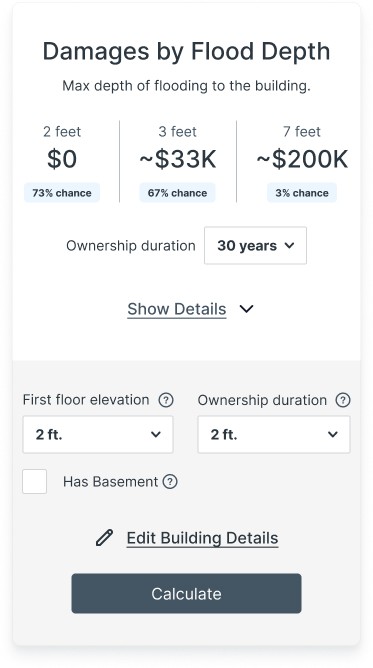
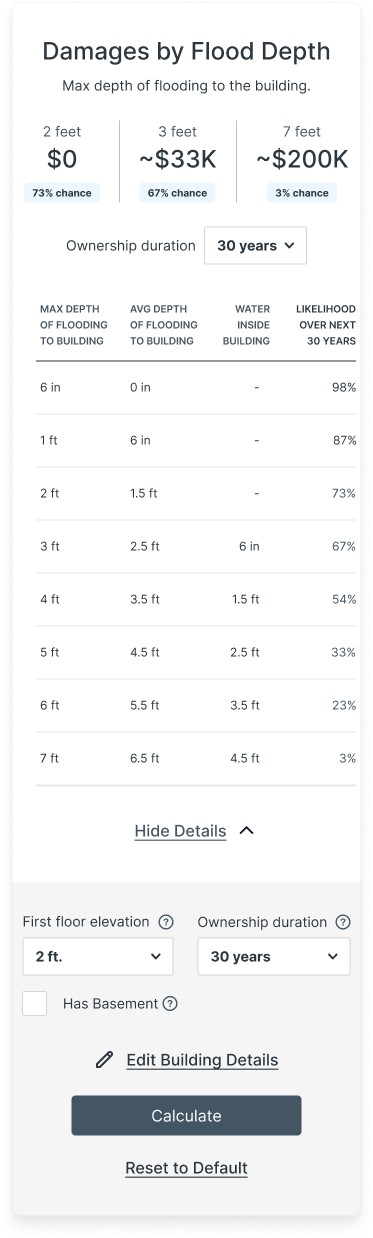
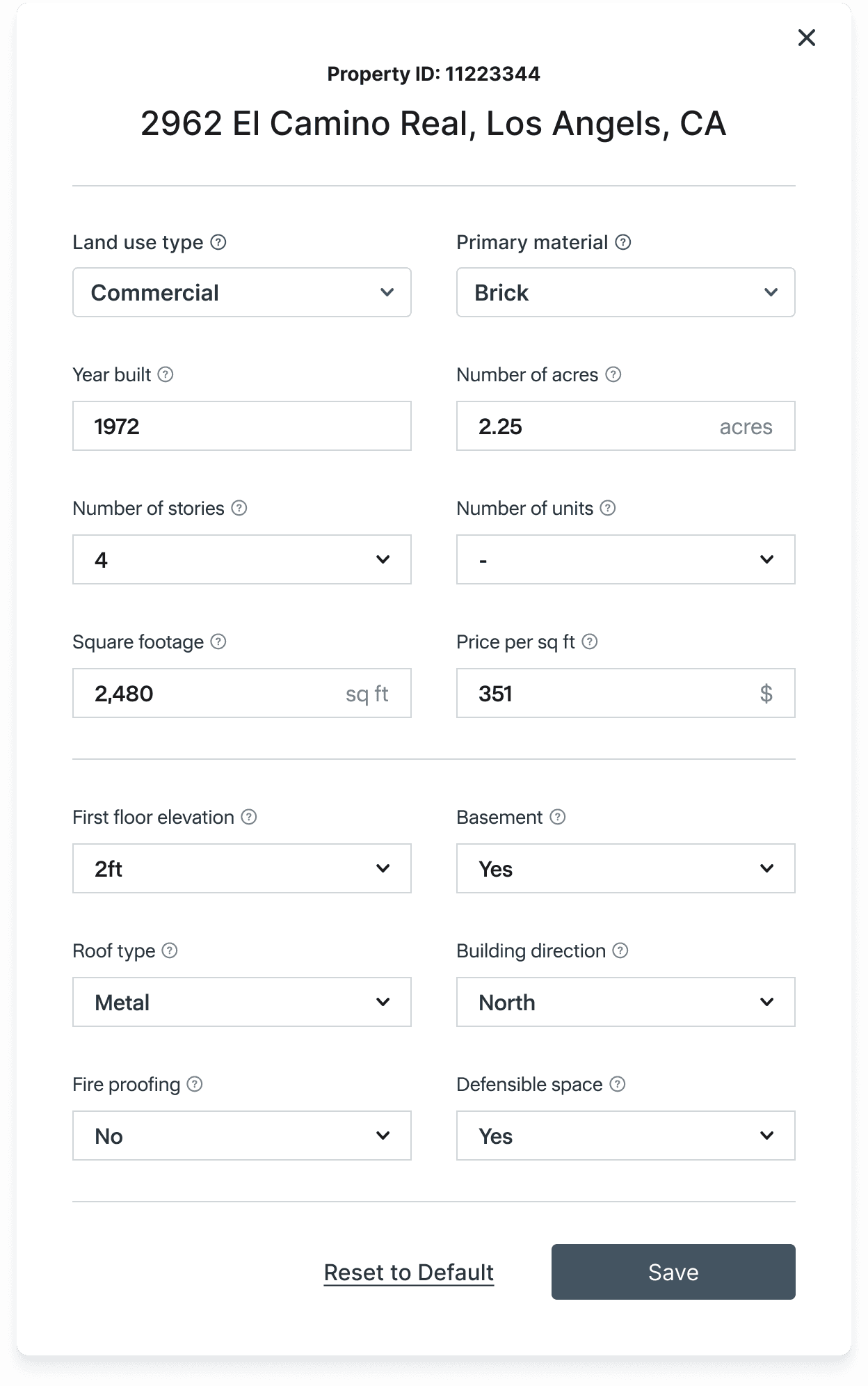
This approach balanced simplicity and depth, enabling users to understand risk at a glance while confidently accessing the underlying data when needed.
Shipped Experience
mproved Comprehension
Reduced Friction
Stronger Conversion
Final Product Detail Experience
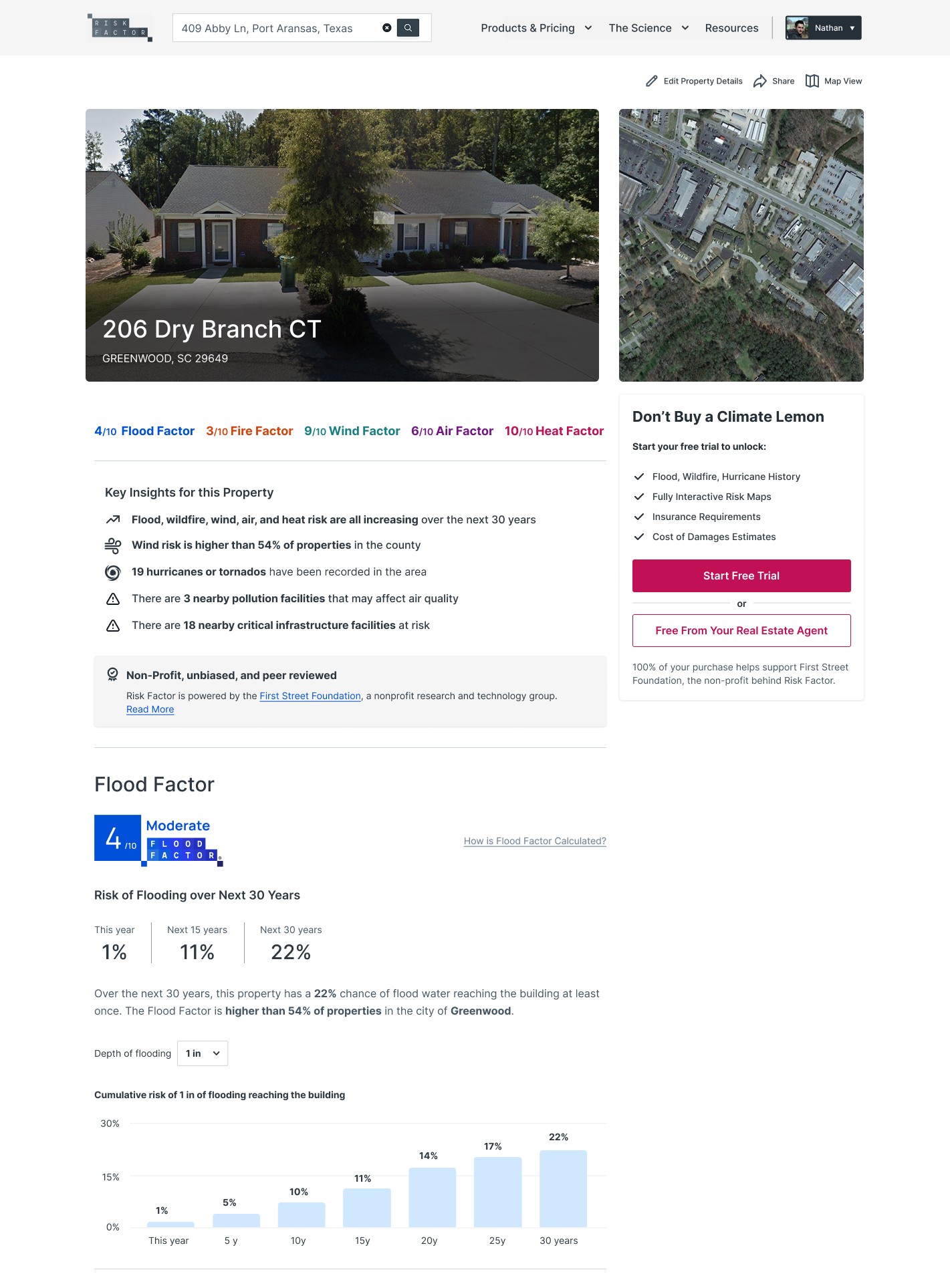
The final product detail experience brings together clear hierarchy, consistent patterns, and progressive disclosure to support confident decision-making across devices.
The experience scales across breakpoints while preserving hierarchy and progressive disclosure.
The experience scales across breakpoints while preserving hierarchy and progressive disclosure.
Results & Impact
Clear Hierarchy
Consistent Patterns
Progressive Disclosure
Measurable Impact on
Engagement & Conversion
The redesigned product detail experience improved how users understood and acted on complex climate risk data. Clearer hierarchy, progressive disclosure, and more actionable summaries reduced friction in the decision-making flow and directly contributed to stronger engagement and conversion outcomes.
217%
Increase in trial sign-ups
$35K
Grew from $1K in monthly subscription revenue
13%
Increase in time on site
200+
New sign-ups per week
Redefining & Designing
User-Centric
Adaptive Layout
Performance Optimization
Intuitive Navigation
Refining the Direction for
Clarity & Scale
With a clear direction established, the design was refined to improve clarity, consistency, and scalability across the product detail experience. Iteration focused on tightening hierarchy, standardizing components, and ensuring the system could support additional risk factors and future expansion.
Designed for Scale and Maintainability.
Shared components and standardized patterns allowed the product to support additional risk factors without reworking the core experience.
Refining Layout & Hierarchy
Early iterations focused on clarifying hierarchy and improving scanability by surfacing key risk summaries earlier and reducing visual competition between data elements.
Design tradeoff: We reduced the amount of data shown by default and introduced progressive disclosure, prioritizing comprehension for first-time users while preserving access to detailed risk information.
Design tradeoff: We reduced the amount of data shown by default and introduced progressive disclosure, prioritizing comprehension for first-time users while preserving access to detailed risk information.
Data Simplification
Data Visualization
Data Simplification
Adaptive Design
Simplifying Complex Risk Data
Risk data needed to remain accurate, transparent, and defensible while being understandable to non-expert users. The challenge was simplifying how information was grouped, labeled, and sequenced — without reducing credibility or precision.
Clarifying Hierarchy Through Grouping
Related risk data was grouped into consistent, scannable sections to help users understand context and relative severity more quickly.
This shared structure allowed users to compare different risk factors using a familiar pattern, improving comprehension and reducing interpretation effort across the experience.
This shared structure allowed users to compare different risk factors using a familiar pattern, improving comprehension and reducing interpretation effort across the experience.
Progressive Disclosure of Risk Details
Rather than presenting all calculations and configuration options upfront, complexity was introduced incrementally, helping users maintain orientation while retaining full transparency into how risk estimates were generated.
Design tradeoff: We limited the amount of data shown by default and relied on progressive disclosure, prioritizing clarity for first-time users while preserving access to detailed risk information for advanced use cases.
Design tradeoff: We limited the amount of data shown by default and relied on progressive disclosure, prioritizing clarity for first-time users while preserving access to detailed risk information for advanced use cases.
This approach balanced simplicity and depth, enabling users to understand risk at a glance while confidently accessing the underlying data when needed.
Shipped Experience
mproved Comprehension
Reduced Friction
Stronger Conversion
Final Product Detail Experience
The final product detail experience brings together clear hierarchy, consistent patterns, and progressive disclosure to support confident decision-making across devices.
The experience scales across breakpoints while preserving hierarchy and progressive disclosure.
Results & Impact
Clear Hierarchy
Consistent Patterns
Progressive Disclosure
Measurable Impact on
Engagement & Conversion
The redesigned product detail experience improved how users understood and acted on complex climate risk data. Clearer hierarchy, progressive disclosure, and more actionable summaries reduced friction in the decision-making flow and directly contributed to stronger engagement and conversion outcomes.
217%
Increase in trial sign-ups
$35K
Grew from $1K in monthly subscription revenue
13%
Increase in time on site
200+
New sign-ups per week
Nathan Rosler
Senior Graphic
Designer &
Visual Design Lead
Nathan Rosler
Senior Graphic
Designer &
Visual Design Lead
Nathan Rosler
Senior Graphic
Designer &
Visual Design Lead
Nathan Rosler
Senior Graphic
Designer &
Visual Design Lead