RISK FACTOR
From a House of
Brands to a
Unified Brand Vision.
Unifying First Street and Risk Factor into a single brand dedicated to bridging financial and climate risk. Trusted by governments, leading banks, corporations, and consumers alike, this brand merge guarantees access to top-tier climate risk data for all stakeholders. The Risk Factor website (riskfactor.com) will seamlessly redirect to firststreet.org, with no impact on functionality.
Web
Category
Figma
Tools
2 UX/UI Designers
Team
UX/UI Design, Design System
My Role
5 Months
Duration
Executive Summary
First Street operated as both a parent company and the steward of Risk Factor, its flagship climate risk product, resulting in fragmented brand recognition and an unclear relationship between the organization and the tool itself. I led the effort to merge Risk Factor into First Street, unifying the product and company under a single, cohesive brand system while preserving existing user trust and product equity.
This work focused on aligning visual identity, product language, and interaction patterns across marketing and product surfaces, clarifying First Street as the primary brand while integrating Risk Factor as a core experience within it.
Clarified the relationship between First Street and its flagship product
Established a unified brand system across product, marketing, and platform surfaces
Created a scalable foundation for future tools and nationwide expansion
Identifying Issues &
Designing Solutions
First Street functioned as both a company brand and the owner of Risk Factor, its flagship product—yet the two existed as largely independent identities. This separation created confusion around brand ownership, diluted First Street’s recognition, and introduced unnecessary complexity across product and marketing surfaces. As Risk Factor gained traction, it became increasingly important to clarify how the tool related to the company behind it without erasing the trust and familiarity users had already built.
Problem
First Street and Risk Factor existed as separate identities, creating confusion around brand ownership and weakening First Street’s ability to present a cohesive, scalable platform. This fragmentation introduced inconsistency across product and marketing surfaces and made it harder to clearly communicate value at the company level.
Constraints
Any consolidation needed to preserve Risk Factor’s existing equity, avoid disruption for current users, and support continued growth across product and marketing channels.
Evolving Visual Identity
Brand Alignment
System Consistency
Visual Hierarchy
Evolving the Visual Identity Without Losing Trust
With Risk Factor transitioning from a standalone product into a core part of the First Street brand, the visual identity needed to evolve, without disrupting user trust or diluting product credibility. Rather than pursuing a full rebrand, we focused on refining typography, color usage, layout systems, and visual hierarchy to better align product and marketing surfaces under a single, cohesive identity.
The goal was to preserve the analytical, data-driven feel users trusted while introducing clearer brand ownership, improved readability, and a more modern visual language that could scale across products, platforms, and future offerings.
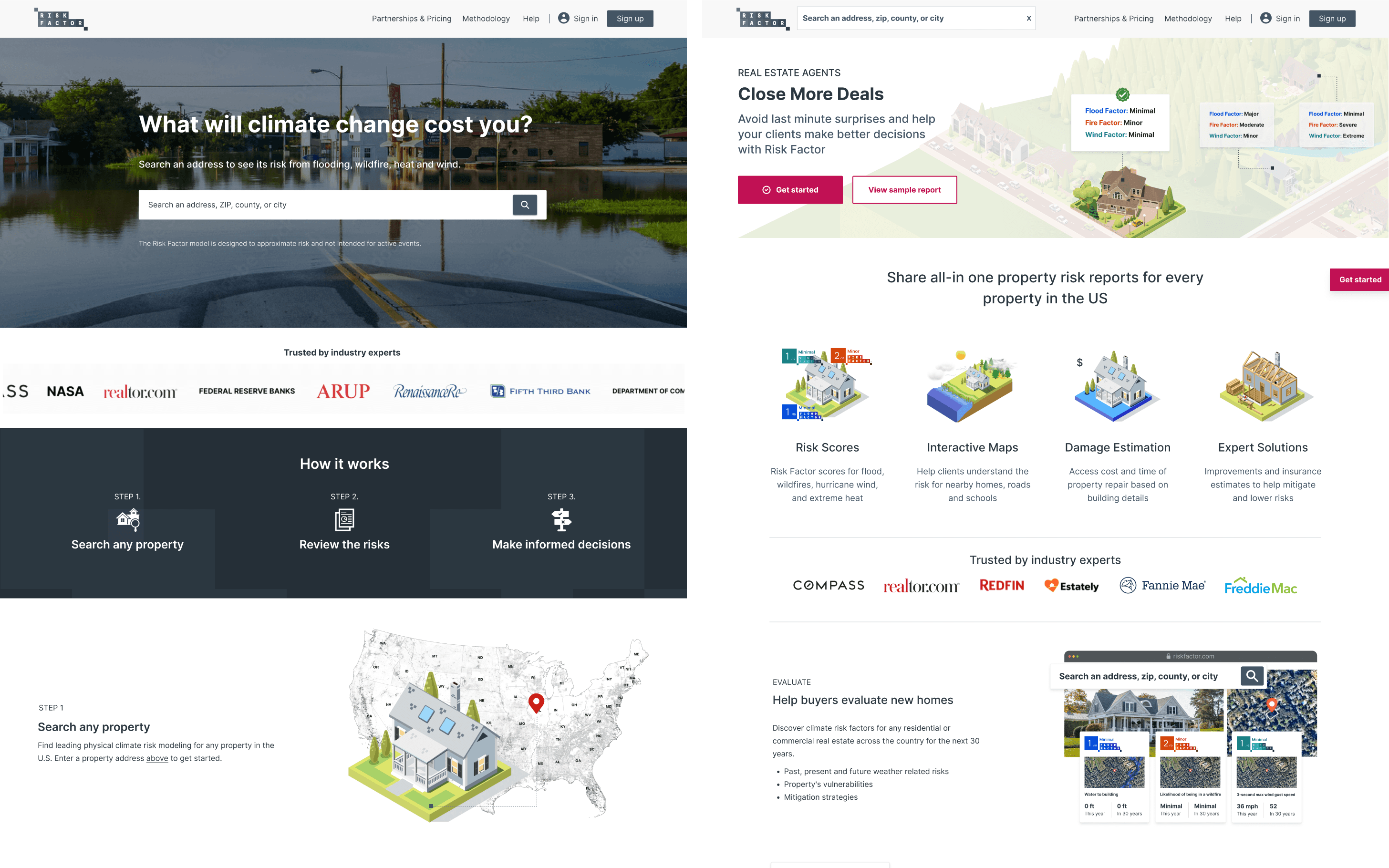
Risk Factor Before Brand Integration
Early Risk Factor surfaces leaned heavily on illustration to convey approachability. While effective initially, this visual language created tension as the product matured and became more closely associated with First Street’s role as a trusted authority.
Examples of Risk Factor’s standalone visual identity prior to brand integration
Building a Unified Visual System
Shared Components
Scalable Patterns
Cross-Surface Consistency
From Visual Alignment to System Execution
With the visual direction established, the focus shifted to turning that direction into a system teams could use consistently across product and marketing. Rather than pursuing a full redesign, we prioritized a small set of foundational elements, color, typography, and layout patterns, that could be applied broadly, extended safely, and maintained over time.
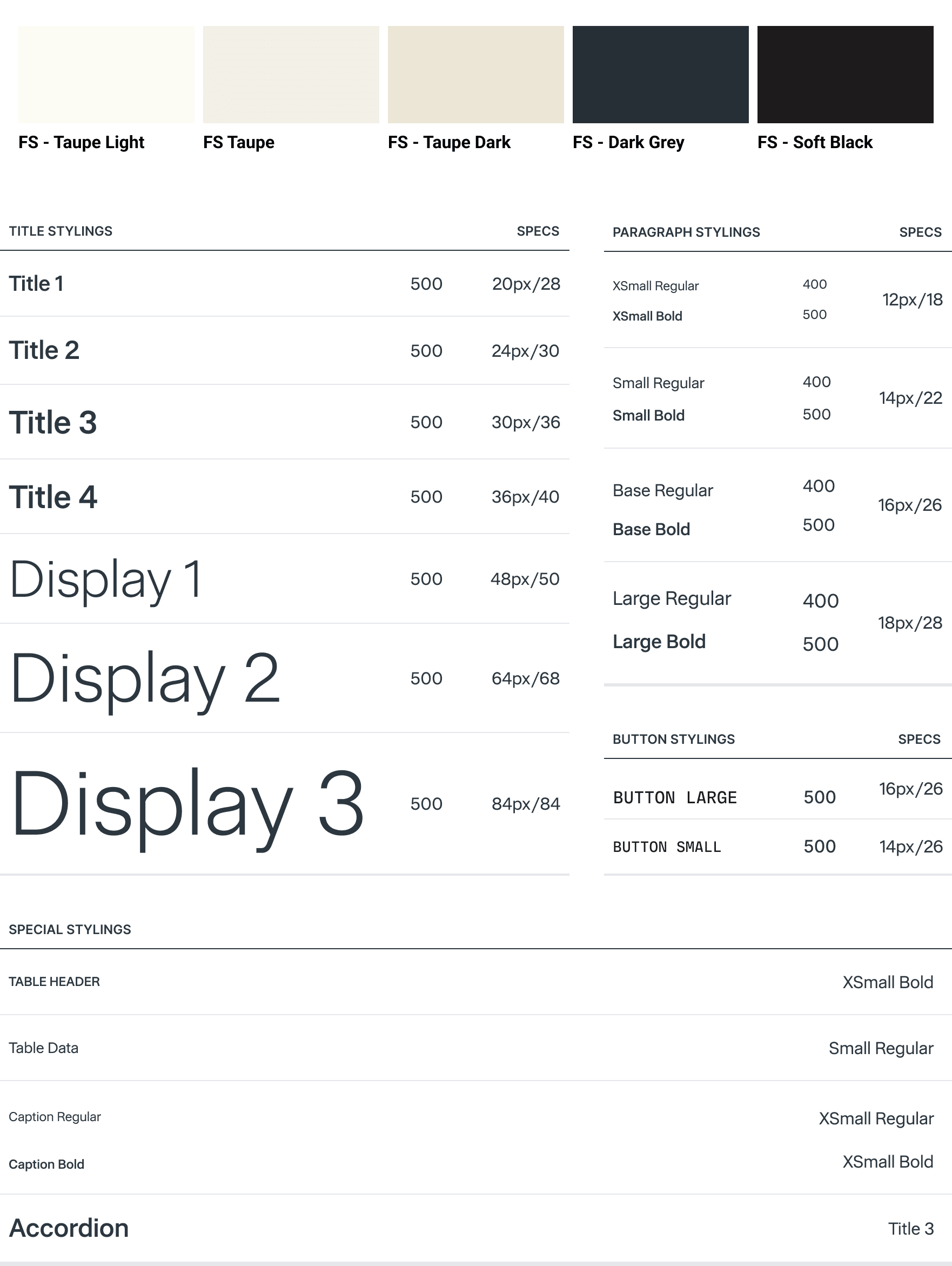
Establishing Foundational System Elements
We began by standardizing core visual foundations, color palettes and typography scales, that could anchor every surface. These decisions created immediate alignment across product and marketing while establishing clear rules teams could build on without reintroducing inconsistency.
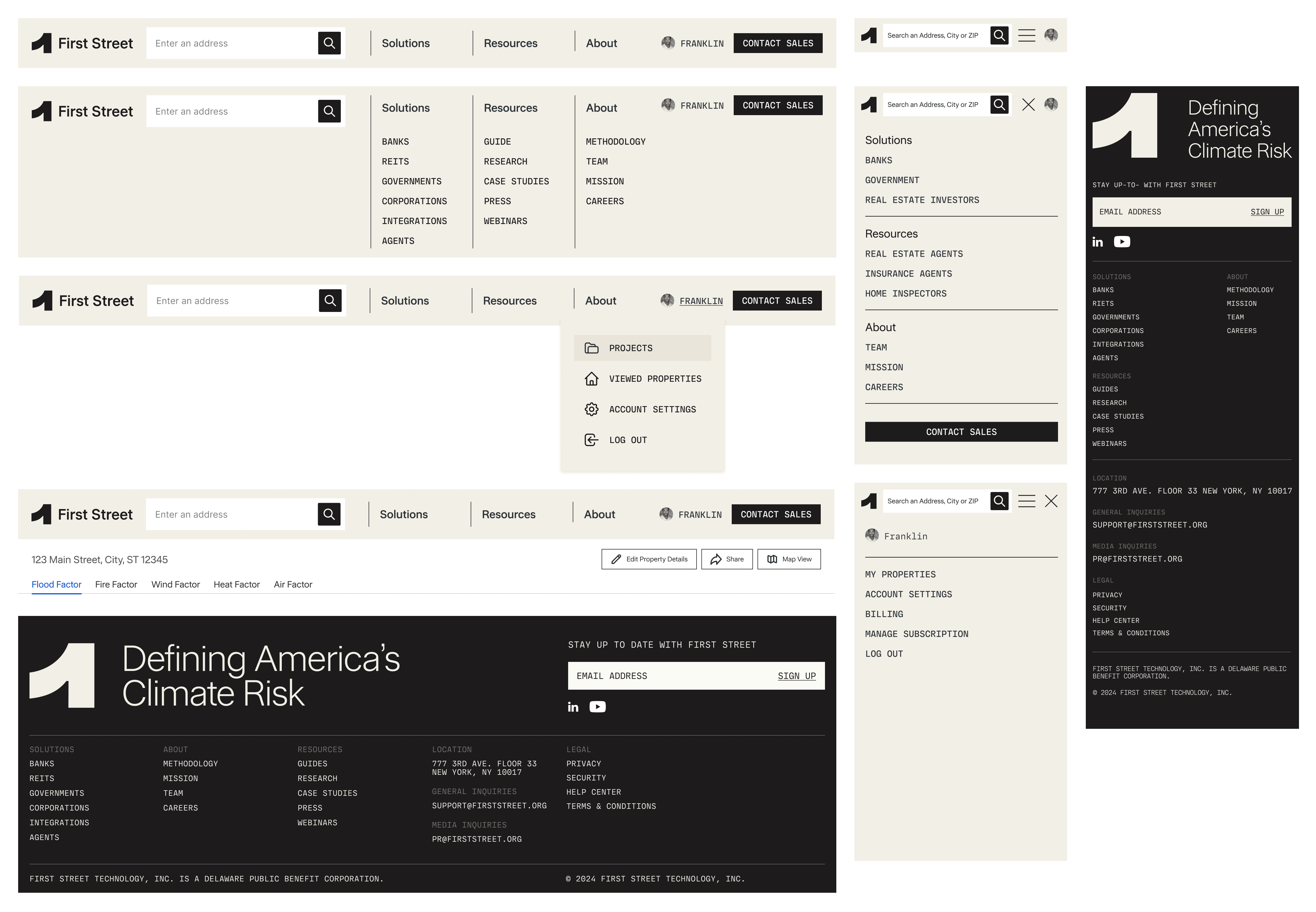
Standardizing Navigation Across Product and Marketing
We redesigned headers and footers as shared system components, creating consistent navigation across both product and marketing surfaces. This established predictable structure and hierarchy while reinforcing First Street as a single, cohesive platform.
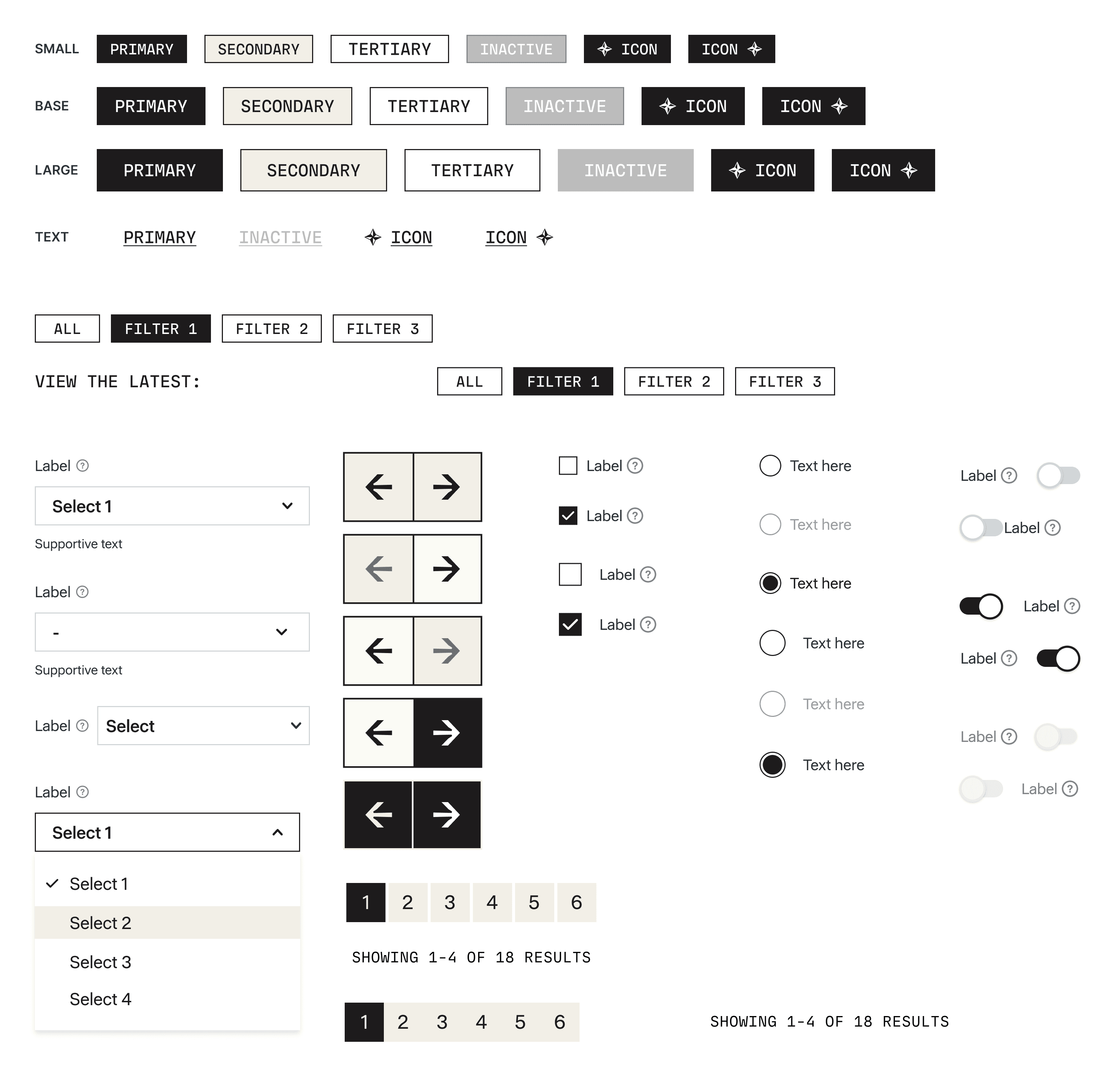
Buttons & Selectors
We standardized buttons, selectors, and form controls to reduce visual noise and establish a more precise, system-driven interface. Squared corners, consistent typography, and clear state treatments reinforced a more scientific and authoritative tone across the platform.
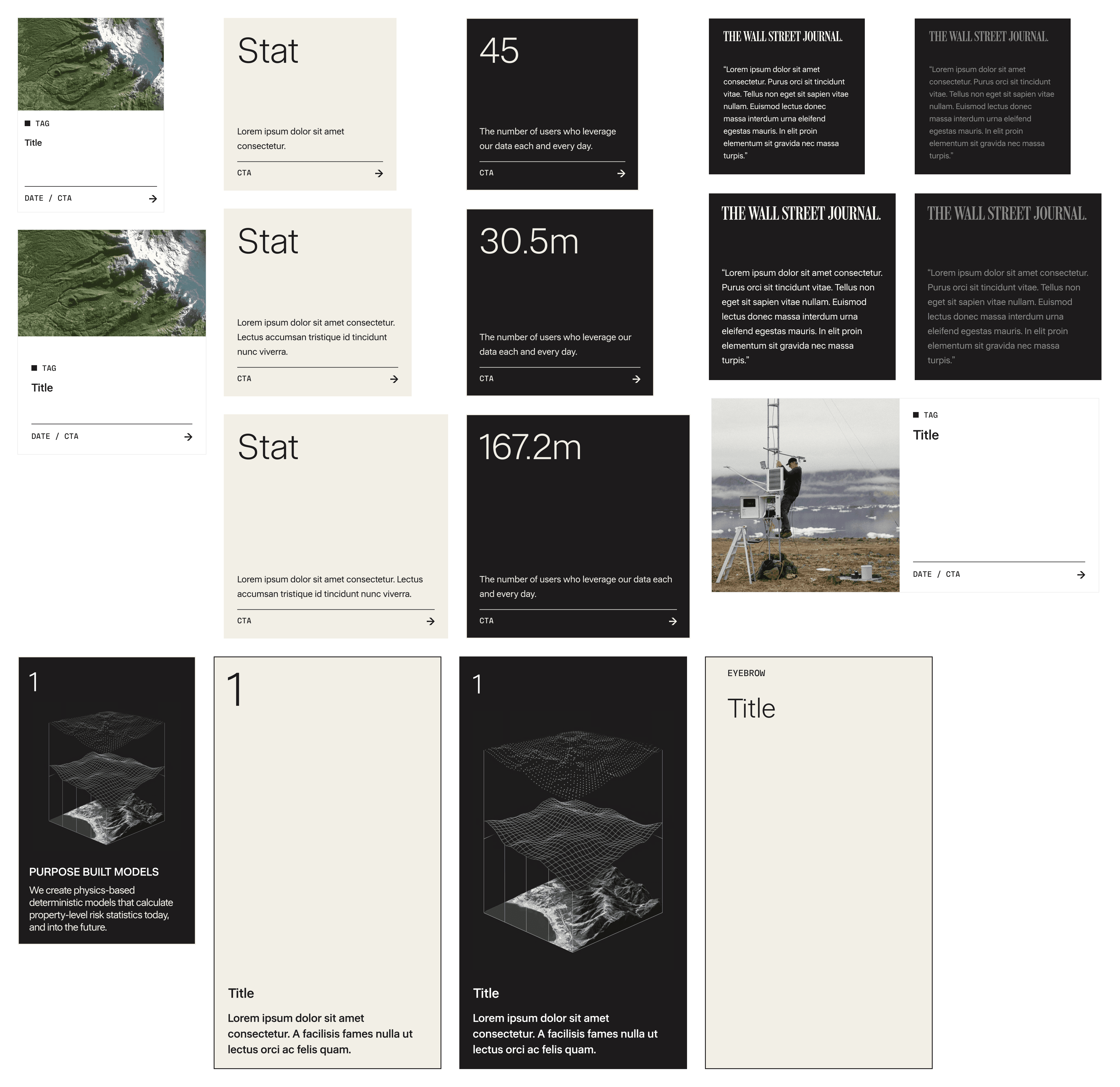
Cards
Cards were standardized as a primary layout pattern for data, content, and credibility. A consistent structure and shift toward photography and statistics reinforced trust while allowing the system to scale across product and marketing use cases.
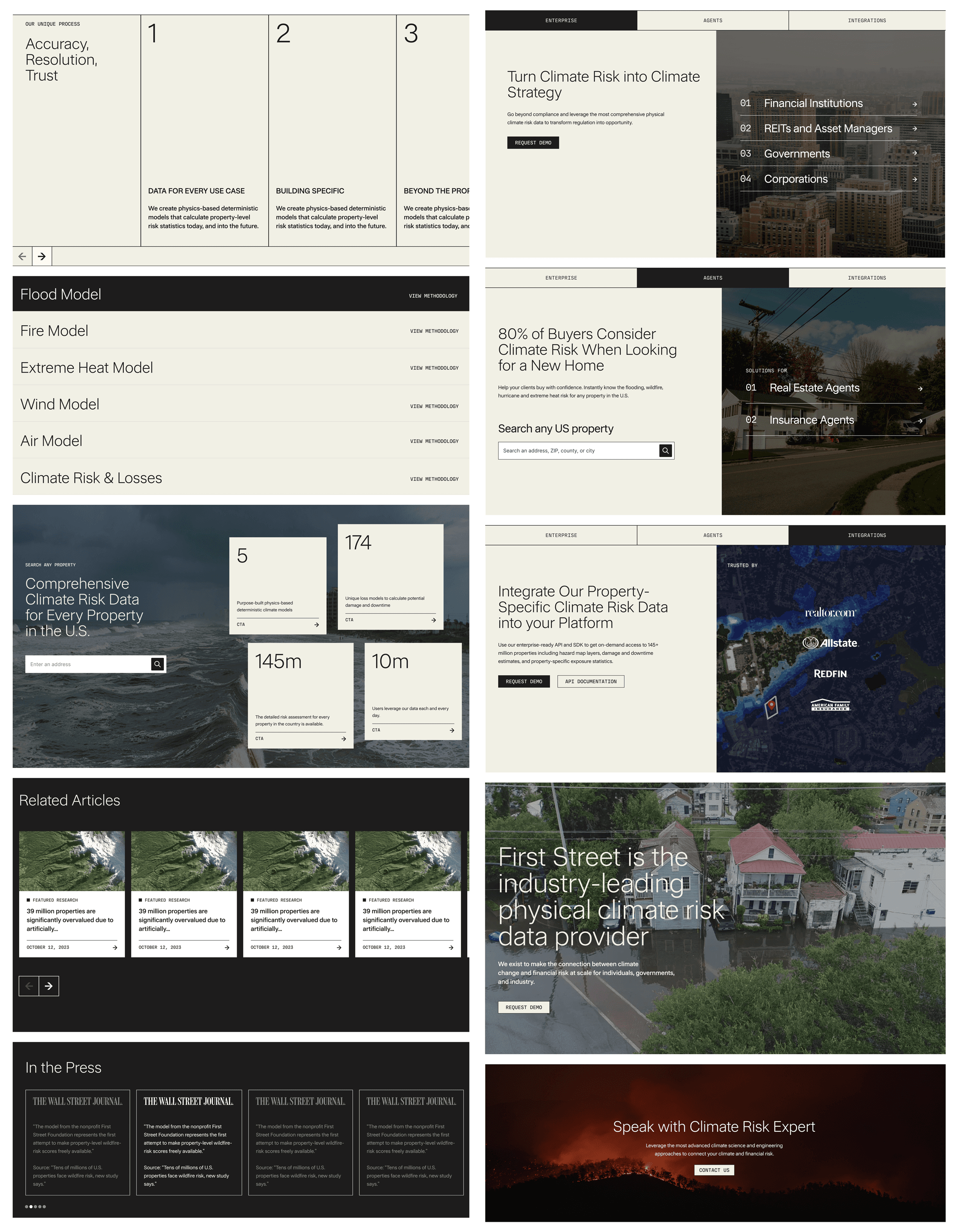
Establishing Brand Principles for a Unified System
Before aligning product and marketing, we defined a shared set of brand principles to guide decisions across every surface. These principles ensured the evolving identity reinforced credibility and trust, while remaining flexible enough to support future tools, datasets, and audiences.
Results & Impact
Unified Brand Ownership
System Consistency
Built to Scale
Delivering a Cohesive Brand
Experience at Scale
Unifying Risk Factor under the First Street brand reduced fragmentation across product and marketing surfaces while preserving user trust in a highly technical domain. The resulting system clarified brand ownership, improved cross-touchpoint consistency, and created a scalable foundation for future products and expanding datasets, without reintroducing complexity.
Brand Clarity
Users and partners now experience Risk Factor as a core First Street product rather than a separate or competing brand, strengthening credibility and simplifying how the platform is understood and communicated.
System Scalability
Shared components, patterns, and visual rules enabled teams to build and extend product and marketing experiences faster while maintaining consistency across new pages, tools, and audiences.
Organizational Impact
Aligning visual language and interaction patterns across product and marketing improved cross-team collaboration and reduced rework caused by inconsistent brand interpretation.